Changelly exchange is an instant swap route across 20+ crypto trading platforms
In short: Instant crypto swap service for BTC and 1000+ altcoins, using 20+ trading platform partners to quote market rates.
Changelly exchange is an instant cryptocurrency swap service that quotes BTC, ETH, XRP, ADA, and 1000+ other digital assets through a network of more than 20 trading platform partners. A user selects a coin pair, enters a wallet address, sends the deposit, and receives the exchanged asset back to that wallet after the route settles. The service focuses on simple cross-asset conversion rather than full order-book trading.
The 20+ rate-source model behind each quote
The central idea is aggregation. When someone asks for a Bitcoin-to-Solana, Ethereum-to-XRP, or Cardano-to-USDT swap, the service checks partner liquidity venues and presents a rate for the selected pair. That removes the need to open several exchange accounts just to compare small or medium coin conversions. It also explains why the quoted rate changes: the displayed price reflects live crypto markets, available liquidity, network conditions, and the route chosen for that transaction.
Changelly exchange has been active since 2015, which matters because instant swap services depend heavily on operational reliability. The product grew around a checkout-style flow: choose the asset to send, choose the asset to receive, enter the destination address, and follow the deposit instructions. It is built for people who already hold crypto and want a direct conversion without working through an order book.
Fixed and floating rates change the tradeoff
Rate type is one of the first decisions to make. A floating-rate swap follows the market while the transaction is being processed, so the final received amount moves with price changes and route execution. A fixed-rate swap locks the quoted amount for a limited window, which gives clearer expectations but prices in that certainty. Both formats solve different problems.
Floating rates suit users who care most about reaching the destination asset and accept minor movement during settlement. Fixed rates suit users converting volatile assets during active markets, especially when the received amount needs to match a planned payment or portfolio rebalance. The better choice is about predictability, not just the visible number on the quote screen.
What happens after you send the deposit
Once the deposit reaches the address shown for the order, the route moves through confirmation, exchange, and payout. Network confirmation time depends on the source chain. Bitcoin, Litecoin, Ethereum, XRP Ledger, Solana, BNB Chain, and other networks finalize at different speeds, and congestion changes the wait. The service describes typical completion as an average range of about 5 to 40 minutes, with blockchain delays creating the widest differences.
In practice, Changelly exchange sends the purchased crypto to the wallet address supplied by the user after the conversion. That address choice is critical. Sending XRP without the required tag, choosing a token on the wrong network, or pasting a contract address instead of a wallet address creates avoidable recovery problems. A clean workflow starts by confirming the receiving network, the asset ticker, and any memo or destination tag before sending funds.
Wallet integrations make swaps feel native
Many users encounter the service inside a wallet rather than on a standalone exchange screen. Hardware and software wallets integrate third-party swap providers so a holder sees a swap button near their balance. The convenience is real: funds leave the self-custody wallet, pass through the provider's route, and the new asset returns to the address selected in the wallet flow.
This embedded setup also changes support expectations. If a swap stalls inside a wallet interface, the wallet company and the swap provider have different roles. The wallet shows the interface and transaction history; the provider processes the exchange and compliance review. Keeping the order ID, deposit transaction hash, payout address, and selected asset pair in one place makes support conversations much faster.
Costs come from spreads, network fees, and rate type
The visible quote blends several cost layers. Market spread is the difference between the buy and sell prices available from liquidity sources. Network fees pay miners or validators on the source and destination chains. Fixed-rate pricing also accounts for market movement risk during the guaranteed window. A swap with thin liquidity, a congested chain, or a volatile asset pair costs more than a deep BTC-USDT route during calm trading.
Notably, Changelly exchange is most useful when convenience and asset coverage matter enough to justify the all-in quote. A trader making frequent large orders on BTC, ETH, or major stablecoins gets tighter control from an order-book venue such as Binance, Kraken, or Coinbase Advanced. Someone converting a less common asset from a wallet interface values speed, coverage, and fewer account steps.
Supported assets include majors, stablecoins, and long-tail tokens
The catalog covers major coins such as BTC, ETH, XRP, ADA, SOL, LTC, DOGE, and USDT, along with many altcoins across different networks. That breadth is the service's strongest fit: it helps when a user holds one asset and wants another asset that is unavailable or inconvenient on their usual exchange. Long-tail coverage also requires extra attention because the same ticker appears on multiple chains in wrapped or bridged form.
A USDT swap illustrates the point. USDT exists on several networks, and the address format, fee level, and confirmation behavior differ by chain. The same rule applies to assets available on Ethereum, BNB Chain, Tron, Solana, Polygon, and other networks. Selecting the intended network before depositing avoids a mismatch between the coin a user thinks they are buying and the token standard the receiving wallet supports.
When risk checks interrupt a swap
Compliance screening is part of the instant swap flow. Transactions tied to suspicious patterns, sanctioned exposure, mixers, black-market addresses, or inconsistent account behavior face review. In that situation, the provider requests identity information and source-of-funds documentation before releasing, refunding, or completing the order. This is the most important operational risk for privacy-focused users and for anyone moving a large amount through an embedded wallet swap.
Typically, Changelly exchange remains straightforward for routine conversions, yet the user should understand that an instant quote is still a monitored financial transaction. Larger orders, privacy-coin routes, and funds with unclear on-chain history deserve extra caution before the deposit is sent. The practical step is to decide in advance whether completing KYC is acceptable if a review begins.
A first swap workflow that reduces address mistakes
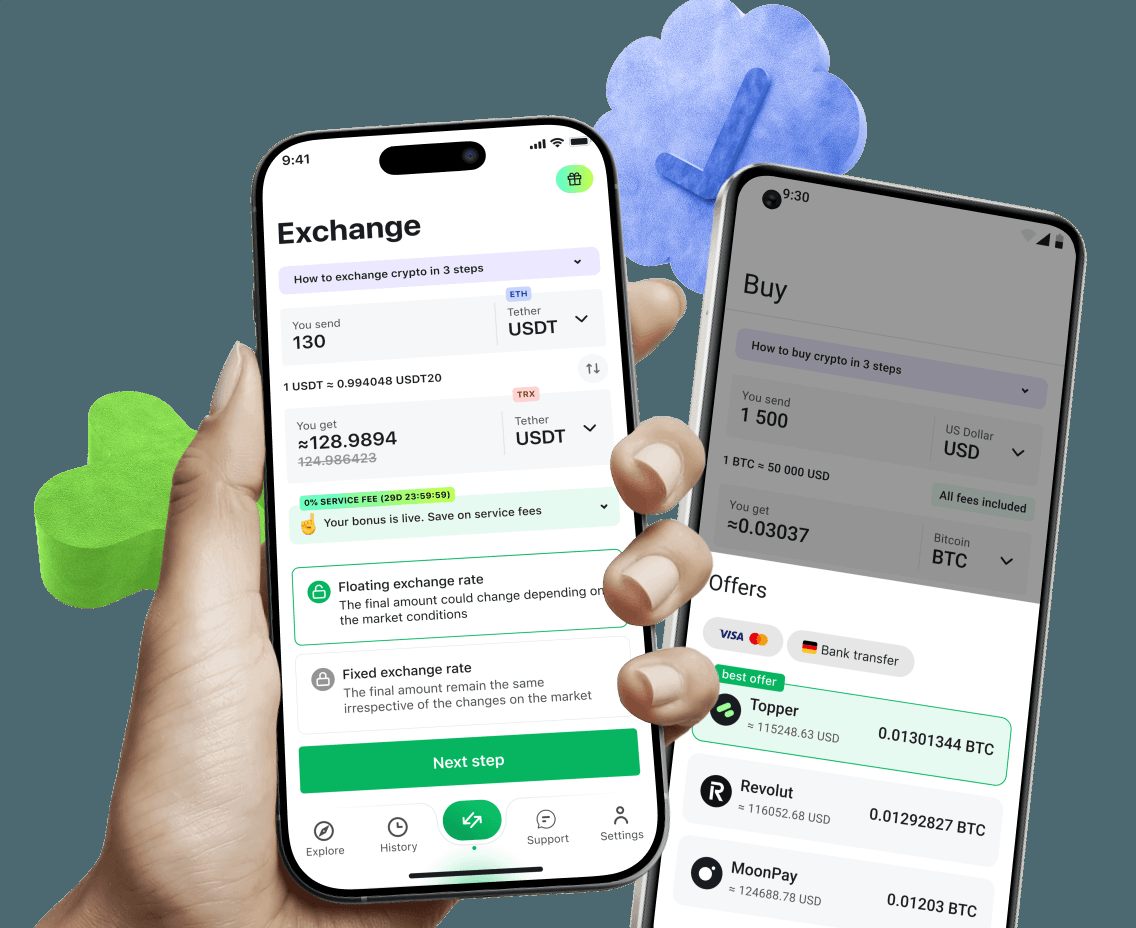
A smooth first order is mostly about slowing down at the points where crypto transactions become irreversible. The interface is simple, but accuracy matters because each chain has its own address rules and fee behavior. Use a smaller transaction before a large conversion when working with a new asset, a new network, or a wallet integration for the first time.
- Choose the exact send asset, receive asset, and network shown by the receiving wallet.
- Compare fixed and floating quotes before starting the order.
- Paste the destination address and add any required memo, tag, or payment ID.
- Send only the asset and network requested for the deposit.
- Save the order ID and transaction hash until the payout arrives.
Where it fits next to centralized exchanges and swap rivals
In most cases, Changelly exchange fits between a wallet swap widget and a full trading account. Binance, Kraken, and Coinbase Advanced give active traders limit orders, deeper charts, and more control over execution. ChangeNOW competes more directly as another instant crypto swap service. MoonPay and Simplex lean heavily into card-based crypto purchases, while Changelly also supports buy and sell flows alongside crypto-to-crypto exchange.
The best fit is a direct conversion where the user values broad asset support, a checkout-style process, and fast settlement to a wallet address. It is less compelling when a user needs advanced order types, detailed tax exports from a single trading venue, or the lowest possible execution cost on very liquid pairs. Used with the right expectations, Changelly exchange is a practical tool for moving from one crypto asset to another without turning every swap into a trading session.
Before you start with Changelly exchange
Fees on Changelly exchange: what should I compare before sending funds?
Compare the final receive amount, not only the displayed rate. The quote reflects market spread, partner liquidity, blockchain network fees, and whether the order uses a fixed or floating rate. A fixed-rate order prices in certainty during the lock window, while a floating-rate order follows the market until execution. Also check whether the asset is moving on Ethereum, Tron, BNB Chain, Solana, or another network because chain fees differ.
Which assets are sensible for a first Changelly exchange test transaction?
A first test transaction works best with a liquid, familiar pair such as BTC to USDT, ETH to USDT, LTC to BTC, or SOL to USDT, using a wallet that clearly supports the destination network. Avoid starting with a large privacy-coin route, a thinly traded altcoin, or a token standard you have never used. The goal is to confirm the address format, memo rules, timing, and payout behavior.
Can I cancel a Changelly exchange order after creating it?
An order that has been created but not funded simply expires or becomes irrelevant. Once the deposit is sent, cancellation depends on the order status, blockchain confirmation, and whether the route has already executed. Crypto transfers cannot be pulled back from the source chain after broadcast. If the order stalls before exchange or payout, the order ID and deposit transaction hash are needed for support review.
How long does a Changelly exchange swap take after the deposit is sent?
The service describes typical swaps as taking about 5 to 40 minutes, but the actual time follows blockchain confirmations and route processing. Bitcoin congestion, Ethereum gas spikes, or a slow destination network extend the wait. The order page and transaction hash are the best places to monitor progress. If the deposit has confirmed on-chain and the payout has not arrived, the order ID becomes the key support reference.