Changelly exchange is an instant route from card buys and crypto swaps to wallet payouts
In short: Instant crypto swap service for trading Bitcoin and 1000+ altcoins, with credit card buys paid directly to a user's wallet.
Changelly exchange is an instant crypto swap service that routes BTC, ETH, XRP, ADA, and 1000+ altcoin trades through connected liquidity partners and pays the purchased asset directly to the wallet address a user enters. The service is built for people who want a simple exchange flow without managing an order book, while still controlling the destination wallet for the asset they receive.
The wallet payout is the core workflow
The distinctive part of this service is the payout model. A user chooses the asset to send, the asset to receive, the amount, and the receiving wallet address. After the order is created and the payment is sent, the exchanged crypto goes to that wallet rather than staying on a hosted exchange balance. That makes the destination address one of the most important fields in the entire transaction.
Changelly exchange supports both crypto-to-crypto swaps and card-based purchases, so the same service covers two common routes: trading one coin for another and buying an asset with fiat payment rails. Bitcoin, Ethereum, XRP, Cardano, Solana, and many smaller assets appear in the wider catalog, which is why the service shows up for searches around altcoin access as much as Bitcoin buying.
How the quoted rate reaches the final receive amount
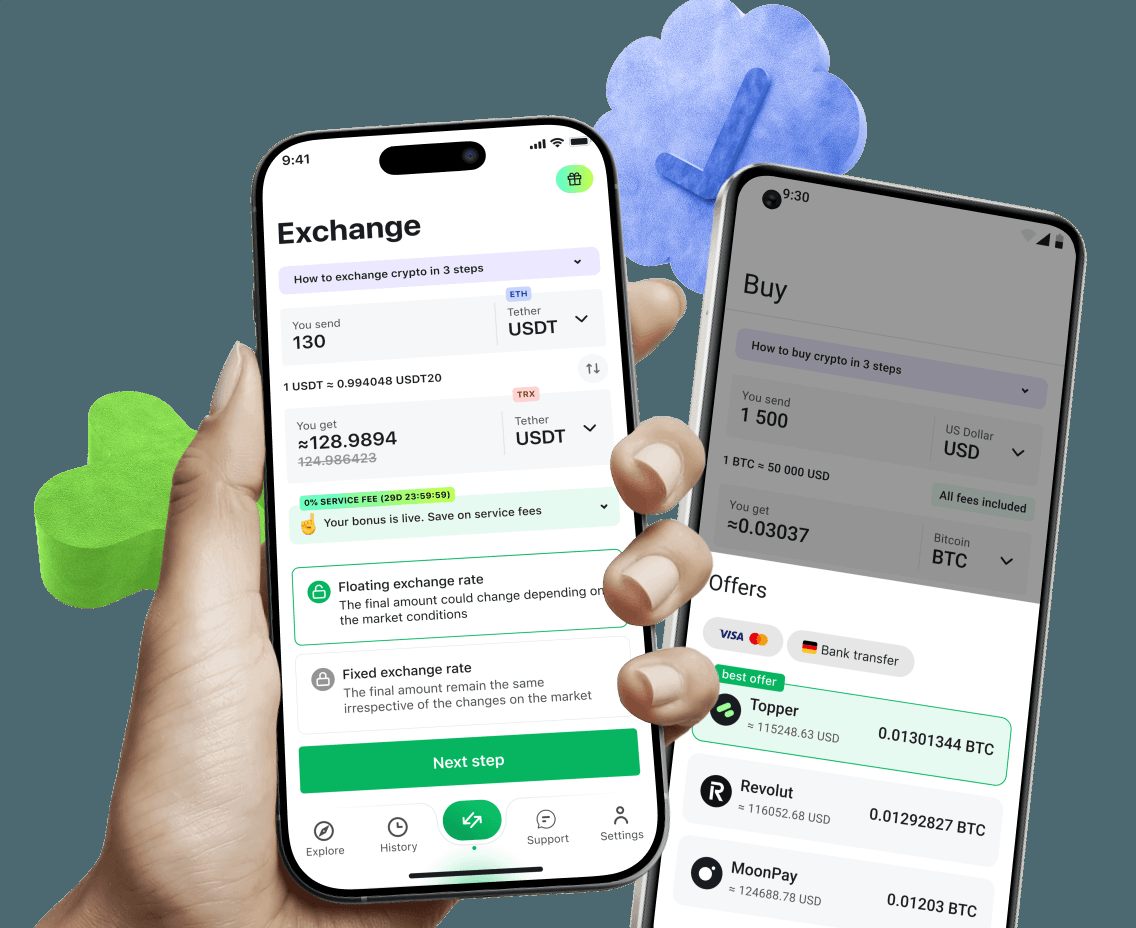
The quote starts with the selected pair and amount. Behind that quote, the service checks connected trading venues and liquidity sources, then presents an exchange path with a projected receive amount. For a fixed-rate order, the displayed outcome is locked for the payment window. For a floating-rate order, the final amount follows market movement until the swap settles.
This distinction matters when markets move quickly. A fixed quote suits users who care about knowing the receive amount before sending funds. A floating quote suits users who accept price movement in return for a rate that tracks the market at execution time. Network fees and provider charges are reflected in the order economics, so the receive amount deserves more attention than a single displayed percentage.
Card buys, crypto swaps, and the difference between them
A card purchase uses payment processing, identity checks, and fiat settlement before the crypto is delivered. The user selects a coin, enters a receiving address, pays with a supported card method, and receives the asset after the provider completes the purchase flow. Changelly exchange presents this as a direct way to buy crypto without first funding a separate trading account.
A crypto swap is narrower. The user already owns one asset and sends it to the deposit address shown for the order. After the incoming transaction confirms on its blockchain, the service exchanges it and sends the output asset to the destination wallet. Bitcoin confirmation time, Ethereum gas conditions, XRP destination tag requirements, and memo fields on certain networks all influence how smooth that flow feels.
When the service fits a real crypto task
It is most useful when speed and asset coverage matter more than advanced trading controls. Someone holding BTC who wants ADA, XRP, SOL, or a smaller listed token can create a pair, send funds, and receive the new asset without placing limit orders. A user entering crypto for the first time can buy a supported asset by card and direct it to a hardware wallet, mobile wallet, or exchange deposit address that supports the correct network.
The same pattern helps with portfolio cleanup. Small balances can be converted into a preferred asset, and users can route funds toward a wallet they already use. The service also works well inside partner products because its exchange API and widget model let wallets add swap access without building their own trading venue.
- Swap one crypto asset for another without an order-book interface.
- Buy supported coins by card and receive them in a wallet.
- Access long-tail altcoins alongside major assets such as BTC and ETH.
- Choose a fixed or floating rate when the pair supports that choice.
- Use wallet, widget, or API integrations that route through the same exchange model.
Starting a swap without losing funds to address mistakes
Address handling deserves deliberate attention because blockchain transfers are final once broadcast. Before using Changelly exchange, the user should confirm that the receiving wallet supports both the asset and the selected network. Sending USDT on one chain to an address or account that only supports another chain creates a recovery problem that the exchange interface cannot solve by itself.
The order form also requires care with tags, memos, and destination identifiers. XRP, XLM, EOS-style accounts, and several exchange deposit systems use extra fields to credit the right account. If the receiving platform asks for a tag or memo, it belongs in the order details exactly as provided. A test-sized transaction is sensible when using a new wallet, a new network, or a coin with unfamiliar address rules.
What the 5 to 40 minute timing means
In practice, Changelly exchange describes its average transaction speed as 5 to 40 minutes, which reflects a normal path rather than a promise for every chain and every payment method. The clock includes blockchain confirmations, rate execution, and payout processing. A fast network with a clear mempool settles more quickly; Bitcoin congestion, delayed card review, or missing memo details stretches the timeline.
Users should separate order status from blockchain status. An incoming deposit can be visible on-chain before enough confirmations are reached. A payout can be sent by the exchange provider before the receiving wallet displays it. Block explorers, wallet refresh delays, and exchange deposit crediting rules all create different views of the same transaction.
Security model: custody, support, and checks
The service presents itself as a non-storage exchange flow: funds are sent for a specific transaction and the output goes to the wallet address supplied by the user. That design reduces the need to leave balances on the platform after a trade. It also increases the user's responsibility for address accuracy, network selection, and access to the receiving wallet.
Notably, Changelly exchange also operates with support and compliance procedures. Large transactions, unusual payment patterns, or provider-side risk checks can trigger additional review. That is normal for card purchases and many exchange services, but it feels very different from a pure on-chain swap. Keep order IDs, transaction hashes, and payment records until the payout is complete, because those details are what support teams use to trace a case.
Fees, spreads, and rate selection in plain terms
The visible cost of a swap is spread across the quoted rate, network fees, and any payment-provider charge for card purchases. Crypto-to-crypto swaps involve blockchain fees on the deposit and payout sides. Card buys add fiat processing costs, which is why buying with a card often carries a different total cost than swapping from an existing crypto balance.
Fixed-rate and floating-rate orders change how users experience that cost. A fixed order makes the receive amount clearer before payment. A floating order follows the live market and can finish above or below the earlier quote. Changelly exchange is strongest when the user reads the final receive estimate, confirms the network, and treats the displayed quote as the decision point.
Instant swaps versus order books and DEX routes
Centralized exchanges such as Coinbase, Kraken, and Binance give users hosted balances, charting tools, limit orders, and deeper account dashboards. They suit people who trade frequently, hold balances on-platform, or need detailed order history. The tradeoff is that moving funds to a self-custody wallet becomes a separate withdrawal step.
On-chain decentralized exchanges such as Uniswap execute directly from a connected wallet through smart contracts. They are strongest for assets and liquidity on supported chains, especially Ethereum and compatible networks. They also require gas management, wallet signing, and attention to token approvals. Changelly exchange sits between these patterns: it keeps the checkout-style swap flow simple while sending the output to a wallet the user controls.
What experienced users check before confirming
Experienced crypto users slow down at the final confirmation screen. They compare the asset ticker, network, receive amount, destination address, memo field, and rate type. They also confirm that the receiving wallet can display or credit the coin. These checks take less time than a support case and prevent the most common self-inflicted problems.
Typically, Changelly exchange is best understood as a routing and checkout layer for swaps and card purchases, not as a place to actively manage a trading account. Its appeal comes from broad coin coverage, a straightforward interface, live support, app availability, and direct wallet payout. Used with accurate address details and realistic timing expectations, it provides a practical route between major coins, altcoins, and card-funded crypto purchases.
What to know about Changelly exchange
What fees should I expect on a Changelly exchange card purchase?
A card purchase includes the quoted crypto rate plus card-processing and network costs that are reflected before confirmation. The total cost differs from a crypto-to-crypto swap because fiat payment providers add their own charge structure. The clearest number to compare is the final amount of crypto expected at the receiving wallet after all purchase and transfer costs are included.
Can I cancel a Changelly exchange swap after sending funds?
After funds are sent to the deposit address, cancellation becomes limited because the blockchain transfer has already moved. If the order has not executed, support may review the case using the order ID and transaction hash. Once the exchange and payout are completed, the transaction follows normal blockchain finality and cannot be reversed through the interface.
Which rate type is better for volatile coins on Changelly exchange?
A fixed rate is better when the user wants the receive amount locked before payment, especially during sharp market moves. A floating rate follows live market pricing until execution, so the final payout can differ from the quote shown earlier. For volatile altcoins, the fixed option gives clearer expectations, while the floating option accepts market movement as part of the trade.
Is KYC required for every Changelly exchange transaction?
KYC is not the same for every order type. Card purchases and flagged transactions involve more identity and payment checks than a routine crypto-to-crypto swap. Compliance review can also appear when transaction patterns trigger risk controls. Users planning a large purchase or time-sensitive swap should account for possible verification before expecting the payout to finish.